
The future of energy is

Guaranteed cost savings. Reduced energy use.
PMCS Power dynamically conditions power at the source, removing harmonics, imbalance, and reactive energy so every kilowatt does productive work—cutting energy waste, reducing costs, and protecting equipment. Guaranteed.
See how much energy you’re wasting.

Approved by





Addressing the World’s Hidden Energy Crisis
A proven, patented approach to eliminating electrical waste and maximizing efficiency across mission-critical facilities.
PMCS Power exists to solve one of the most expensive and invisible problems in modern buildings: wasted electricity caused by poor power quality. Most facilities lose 10–30% of the power they purchase to harmonics, reactive energy, imbalance, and inefficient current flow. PMCS Power addresses this at the source with the Maximum Power Transfer Solution (MPTS)—a patented, UL-approved, real-time Power Management Control System that dynamically cleans and optimizes electrical networks without replacing existing infrastructure. The result is measurably lower energy and demand costs, improved power quality, extended equipment life, reduced carbon emissions, and fast ROI—validated through third-party measurement, government testing, and real-world deployments in hospitals, data centers, universities, and industrial facilities worldwide.
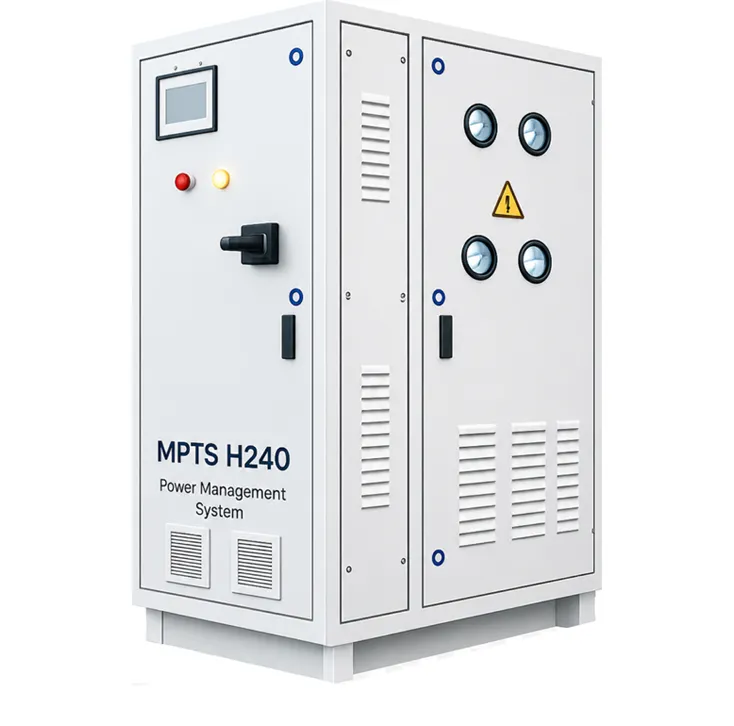
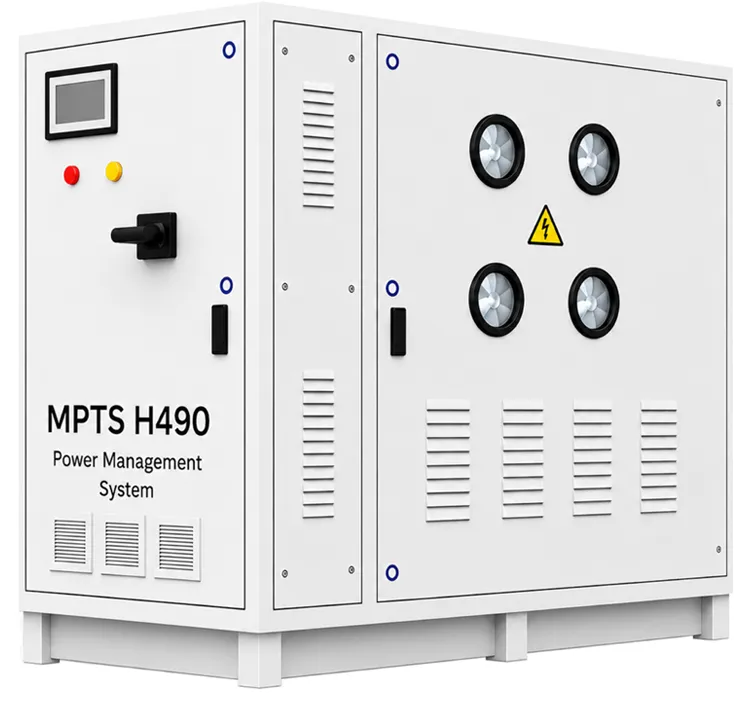
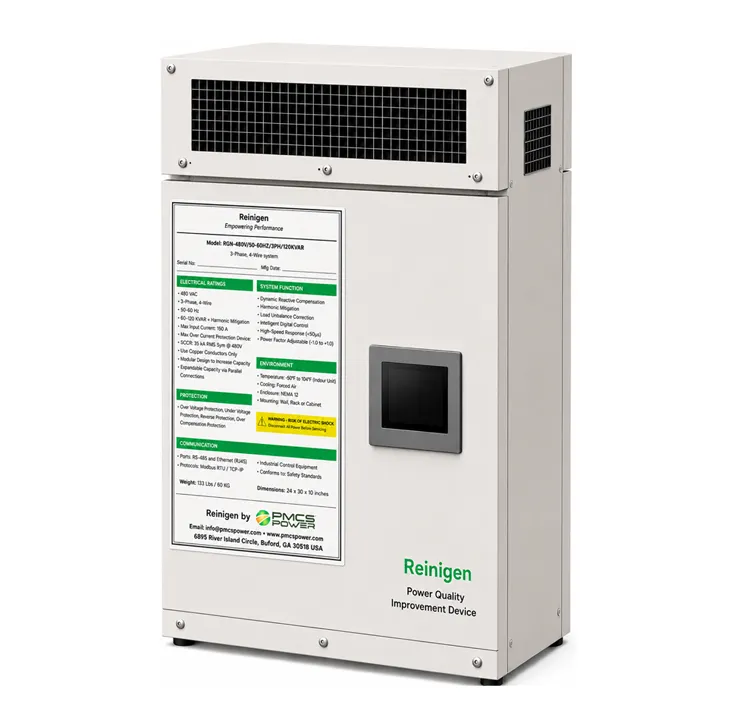
Explore the future with and without PMCS Power


Electrical impact
Cleans and stabilizes power in real time, reducing current, harmonics, reactive energy, and voltage instability.
Power qualityEnd-user impact
Eliminates electrical waste to free hidden capacity within existing panels and transformers, extending equipment life.
EfficiencyUtility impact
Reduces peak demand and smooths load profiles, easing stress on substations and improving grid reliability.
Grid stabilityPower generation impact
Improves generator efficiency and reduces peak load, lowering fuel use and delaying new capacity needs.
GenerationEnvironmental impact
Lowers total energy demand and reduces CO₂ emissions with measurable sustainability gains — no offsets needed.
SustainabilityThe hidden cost behind the energy crisis and how to eliminate it.
Press play

Stop pouring off electrical foam and unlock the capacity you already pay for
Up to 20% More usable capacity recovered from existing serviceA 30bbl brewery is a multi-voltage, motor-intensive plant where peak demand can exceed 120 kW. PMCS Power reduces the electrical waste inside that load and converts it into measurable capacity, lower costs, and fewer interruptions. This allows facilities to support added fermenters, a centrifuge, or a second packaging shift without a costly service upgrade. It also stabilizes voltage during critical stages like knockout, crash cooling, and packaging to prevent PLC resets and drive faults, all while lowering thermal stress on glycol compressors, VFDs, motors, and transformers.
Brewery benefitsVerified returns that go far beyond the utility bill
1–2 Year Payback period across both OPEX and CAPEXA single MPTS unit ($200K installed) generates $42,000–$60,000 in annual OPEX savings while avoiding $140,000–$310,000 in capital expenditure. Real deployments confirm the model: NORAD avoided $5.28M in compressor replacements against a $240K investment. A National Hospital deferred a $1M chiller replacement. A County Prison achieved 1-year ROI from a 43% reduction in maintenance alone. The two-unit (2×) configuration delivers approximately 2× the OPEX savings and 2× the CAPEX avoidance—with the same payback profile as the first unit.
ROI mechanismsPlanet. People. Prosperity. One installation, all three.
Up to 40% CO₂ emissions reduction — verified in deploymentsThe MPTS Sustainability Effect advances all three ESG pillars simultaneously. Environmentally, verified deployments achieve up to 40% CO₂ reduction and up to 90% kVAR reduction—directly measurable Scope 2 savings reportable under ESG and UN SDG frameworks. MPTS models are sized as equivalents to 25, 50, and 100 kW solar installations, delivering renewable-equivalent savings through efficiency alone. Economically, most facilities achieve ROI within 1–3 years, after which MPTS functions as a long-term revenue source through sustained energy savings that compound over the system's 20+ year life.
Sustainability pillarsThe problem with capacitor banks—and the replacement for them
0.95–0.99 PF True Power Factor achieved under dynamic loads, guaranteedTraditional PFC capacitor banks correct only the phase angle between voltage and current—one dimension of a three-dimensional problem. In facilities with non-linear loads, they create resonant conditions that amplify harmonic distortion at the 5th, 7th, and 11th orders. MPTS corrects displacement power factor, distortion power factor, and load imbalance simultaneously—at 20,000 corrections per second—with no capacitors, no resonance risk, and a 22% average carbon emissions reduction confirmed in deployments.
What MPTS replacesTrue Power Factor = Displacement PF × Distortion PF
PUE 1.75 → 1.58 Demonstrated on a 1 MW data center — 170 kW savedTrue Power Factor is the product of two independent components. A facility with a capacitor-corrected displacement PF of 0.89 and 38% THD has a True PF of only 0.832—still incurring utility penalties despite capital already spent on correction. MPTS corrects both components simultaneously, eliminating the contradiction. On a 1 MW data center, this reduces facility power by 170 kW and yields $178,000/year in avoided energy cost from a single upstream device, with ROI typically achieved in 1–2 years.
Both components correctedWhy MPTS makes Active Harmonic Filters redundant
Levels 2–51 Full harmonic coverage — 120 Hz to 3,060 HzActive Harmonic Filters (AHFs) are reactive, single-purpose devices that cancel harmonics after they occur—consuming 1–3% of the facility's load in the process, and generating heat that adds directly to the cooling burden. MPTS prevents harmonic distortion at the source through real-time impedance matching, covering all triplen harmonics and levels 2–51 as a standard integrated function—while simultaneously delivering power factor correction, voltage stabilization, capacity release, and reactive energy management that AHFs cannot address.
MPTS vs. AHFEvery line item on your utility bill, addressed at once
$190K–$216K Annual savings on a representative 500 kW reference siteMPTS touches every billable element of a commercial utility tariff simultaneously. Correcting power factor from 0.76 to 0.97 on a 500 kW site reduces kVA demand charges by $23,900/year alone. Eliminating a 14% power factor penalty removes another $46,200/year. Adding HVAC, IT, motor, and VFD efficiency savings brings total annual benefit to $190,000–$216,000—against a fully installed cost of $200,000, yielding a 10–12 month simple payback on the reference site.
Bill line items impactedRecover the capacity your transformer already has
−50.6% kVA Apparent power reduction — live 500 kVA manufacturing transformer, 15-week studyIn a landmark field study, MPTS reduced apparent power by 50.6%, reactive power by 96.2%, and unconsumed kVA by 94.6%—freeing 83.1% of a 500 kVA transformer's rated capacity for new loads. With distribution transformer lead times now exceeding 1–2 years due to AI data center demand, MPTS provides a proven fourth option: recover the capacity your existing transformer already has, but can't deliver due to power quality degradation. No new transformer. No waiting. Commissioned in hours.
Transformer outcomesMPTS and VFDs are complementary—not competing
40% longer DC bus capacitor life at <5% THD vs. 14% THD (ABB/Danfoss data)A VFD controls how a motor uses power—but cannot control the quality of the power it receives. Six-pulse VFDs (the most common type) generate dominant 5th and 7th harmonic currents that can push bus THD to 25–40% in HVAC-heavy facilities without upstream mitigation. MPTS, installed upstream of all drives, cleans the power before it reaches the VFD—eliminating harmonic stacking across multiple drives, reducing DC bus stress, extending bus capacitor life by 40%, and preventing the need for per-drive line reactors or AHF systems at each motor control center section.
VFD improvementsClean power protects every backup asset in your fleet
$175K–$210K Annual operating savings across a representative mid-scale siteDirty power attacks backup assets from multiple angles simultaneously. THD above 8% degrades UPS battery life by up to 40%. Poor power factor forces GenSets into a larger frame size—typically $40,000–$80,000 in avoidable capital. A 500 kWh BESS cycling on a distorted supply wastes $131,000/year in charging losses alone. Solar inverters derate or trip when THD exceeds 5% at the point of coupling, causing 2–5% annual yield loss. MPTS resolves all of these from a single upstream installation point—simultaneously and continuously.
Assets protectedA 0.97 PF reading can mask 53% THD destroying your equipment
6 hidden pathologies That a healthy-looking PF number cannot revealTrue Power Factor is a mathematical product—not a measurement of circuit health. An over-corrected capacitor bank can push displacement PF to 1.054 (leading), numerically masking a distortion PF of 0.884 from 53% THD, producing a metered 0.97. The billing meter shows no penalty. Meanwhile, every motor on the bus runs above nameplate temperature, every transformer ages at up to 8× its design rate (K-factor = 14.9), neutral conductors carry 170% of phase current, and VFD bus capacitors degrade silently. MPTS targets all six pathologies simultaneously—not just the headline number.
Hidden circuit pathologiesGuaranteed performance—or 100% client refund
4-step process Analyze → Guarantee → Baseline → Install & verifyEvery MPTS deployment begins with a rigorous analysis: 24 months of utility bills, single-line diagrams, and system usage patterns. A signed performance guarantee is agreed before equipment ships—specifying improvements in kW, kVA, kVAr, True Power Factor, and harmonics (ITHD & VTHD). Utility-grade meters establish a verified baseline across all three phases. If guaranteed improvements are not met within the agreed timeframe, the client receives a 100% refund. The meters don't lie.
What's guaranteedElectrical optimization for government infrastructure — proven in the field
DoD · NORAD · GSA Existing installations at U.S. federal and Department of Defense facilitiesPMCS Power is the technology developer and global distributor of the Maximum Power Transfer System (MPTS), registered on SAM.gov with active federal credentials. MPTS improves energy efficiency, power quality, and infrastructure capacity at government facilities without requiring system replacement or operational downtime. Federal deployments are delivered by partnering with DOE-Qualified Energy Service Companies (ESCOs) and federally awarded contractors — engineering authority over the technology paired with proven field execution under a single accountable team. Verified results include up to 30% demand reduction, 95–99% power factor, and up to 20% capacity increase across military bases, hospitals, data centers, courthouses, water facilities, and schools.
Federal credentialsStop paying for premature equipment failure and unlock the full lifecycle of your plant assets
1 to 50 Levels Harmonic mitigation to protect sensitive electronics and reduce thermal stressA modern production facility relies on interconnected motors, pumps, and refrigeration systems that are highly vulnerable to electrical stress and poor power quality. PMCS tackles the root cause of these issues by reducing excessive current, minimizing harmonic distortion, and lowering thermal stress on transformers, motors, and variable-frequency drives. This proactive stabilization reduces nuisance trips and contactor wear, allowing facilities to prevent unexpected machine stops, minimize rejected packaging, and avoid emergency refrigeration repairs. It also continuously monitors power conditions, empowering maintenance teams to focus on planned, high-value work instead of expensive weekend troubleshooting.
MRO BenefitsEvery power quality solution makes promises. See exactly how MPTS delivers where standalone devices fall short — function by function, with no fine print.
Unlock hidden electrical capacity
PMCS Power releases trapped capacity by reducing current, kVA, and reactive power across the network. Facilities can add up to 20% more load, downsize backup generation, or export excess power—without upgrading transformers, batteries, GenSets, or solar power systems.
Common outcomesClean, stable power—without capacitor banks
PMCS Power corrects power factor and harmonic distortion in real time using solid-state electronics and mathematical algorithms. Voltage is stabilized, THD is reduced, and dirty power is eliminated across balanced loads.
What's correctedWhen kVA approaches kW, waste disappears
By aligning voltage with current waveforms and mitigating THD, PMCS Power consistently achieves power factor levels of 0.95–0.99. This lowers peak demand, reduces total energy consumption, and converts more purchased power into productive work.
Measured improvementsSee the truth—before and after
PMCS Power continuously measures and reports kVA, kW, kVAr, PF, and energy use across all three phases—24/7. Unlike passive meters, it uniquely reads and reports, restores and reports, and verifies performance over 20,000 times per second.
What's trackedOne system. No comparisons.
Unlike PFC banks, filters, UPS systems, or VFDs, PMCS Power actively manages the entire electrical network in real time. Our MPTS platform processes up to 20,000 cycles per second, enabling a single cabinet to deliver results that typically require multiple devices and layers of equipment. Where conventional solutions operate at low sampling rates and address isolated problems, PMCS Power continuously optimizes the entire system at a speed and scale others cannot.
It reduces energy use by 10–30%, improves power quality, lowers heat, and delivers verified savings—while consuming less than 100 watts itself.
Why it's different20%+
Electrical capacity released
Adds capacity across transformers, batteries, UPS, GenSets, and solar without replacement or upgrades—enabling more loads, deferred upgrades, and lower total energy costs.
Capacity95–99%
True Power Factor achieved
Raises TPF consistently under dynamic loads by aligning voltage and current displacement and mitigating THD across the full spectrum.
Power quality25%+
Current and demand reduction
Measured installations show current and kVA demand reductions of 15–25%, lowering peak demand charges and reducing system stress from inrush currents and transients.
Demand90%
Reactive power eliminated
Dramatically improves power quality by lowering line and transformer losses, stabilizing voltage, and reducing heat and equipment wear—eliminating penalty charges.
Efficiency22%
Carbon emissions reduced
Improving power factor and reducing apparent power directly reduces CO₂ emissions by enhancing electrical efficiency and decreasing line losses.
Sustainability1.5–3.5
Return on investment years
ROI typically ranges from 3–4 years for utility payback and 1–2 years for MRO, where OPEX is most avoided and CAPEX most deferred.
ROI20,000
MPTS computing speed
MPTS reads, restores, and reports electrical data 20,000 times per second (50 microseconds) using patented algorithms to display both dynamic bad data and restored good data.
Technology24/7
AI predictive maintenance
Constantly monitors, measures, manages, and controls electrical network health using AI that continuously learns and predicts potential problems or failure points.
AI monitoringPMCS Power performance isn’t theoretical, it’s validated in the real world.
- UL-certified across multiple MPTS models
- Proven reductions in demand, current, and reactive power
- Independent utility and engineering verification
- Deployed in mission-critical facilities worldwide
- Trusted by government, education, and industrial operators
Inaction quietly drains energy, efficiency, and capital every day.
Let’s uncover what’s being lost.
Let's talk about how PMCS Power can help.
You can schedule a call using the AI assistant ⭨ or complete the form below.

© 2025 PMCS Power All rights reserved.